5 November 2025
Achievements and Successes = Impact and Legacy
The satisfying completion of the EuroGO-SHIP three-year project was celebrated in Brussels this week as consortium members presented the results from stakeholder consultation and pilot activities designed to shape a new research infrastructure in support of the delivery of high-quality oceanographic data.

The event was attended by consortium partners and stakeholders from the wider marine science community and included an insightful panel discussion, a greeting from the partner CNR’s Research Vessel the Gaia Blu, show & tell stations to highlight key exploitable results, ocean observation instruments and the opportunity to build a Research Vessel out of Lego.

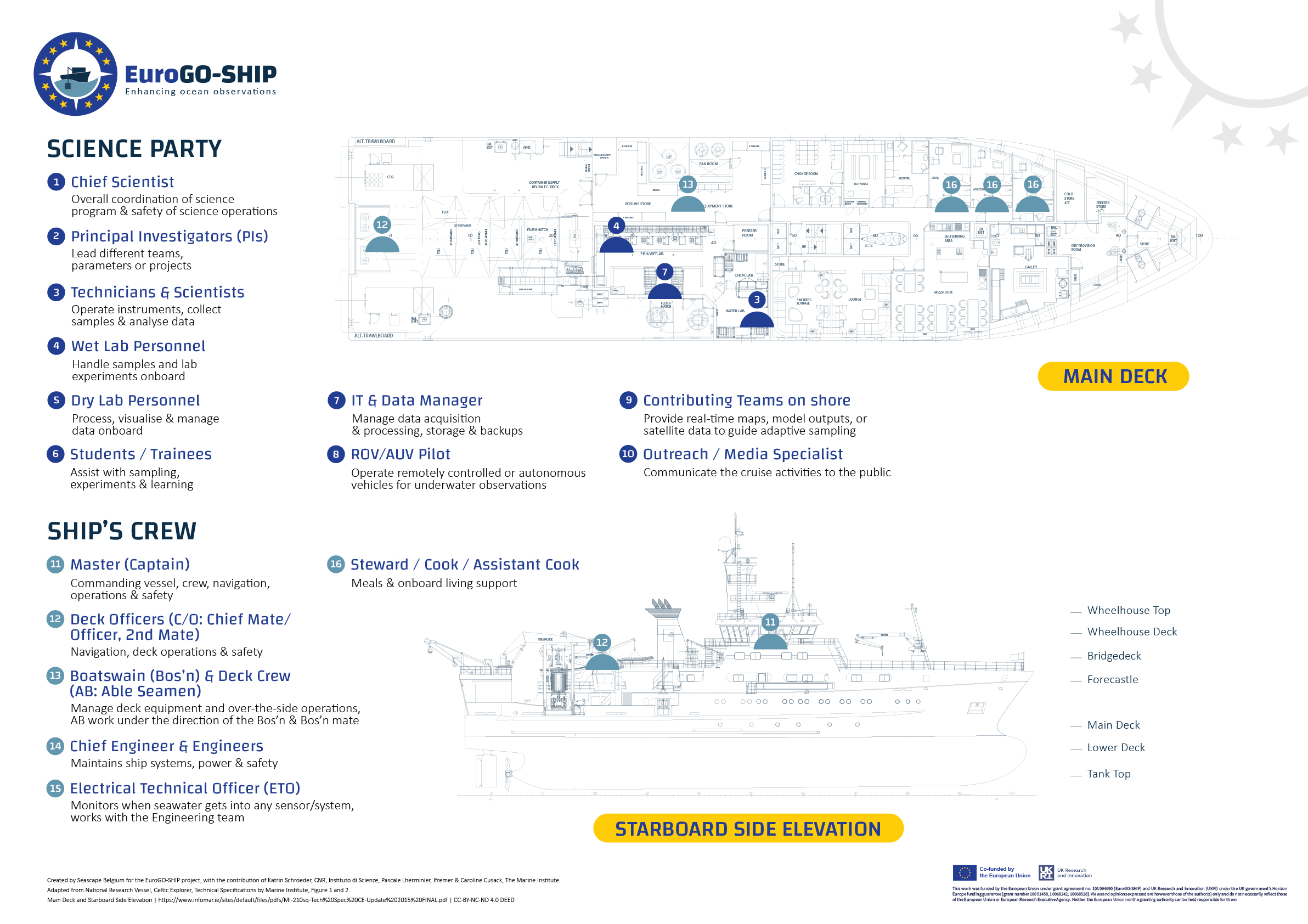
As part of the Show & Tell displays, a poster was created to show all the people involved in a research cruise.
Project activity in the spotlight included:
- A map displaying the results of a survey showing where 583 cruises took place in 2021 in European waters.
- Artefacts from the unprecedented RI workshop in Venice, June 2024
- Training material and tools based on the results of pilots demonstrating methods to improve the quality of data.
- A glimpse at how a proposed new EuroGO-SHIP Research Infrastructure would look like including its value chain, co-designed through consultation with the wider ship-based hydrography community.
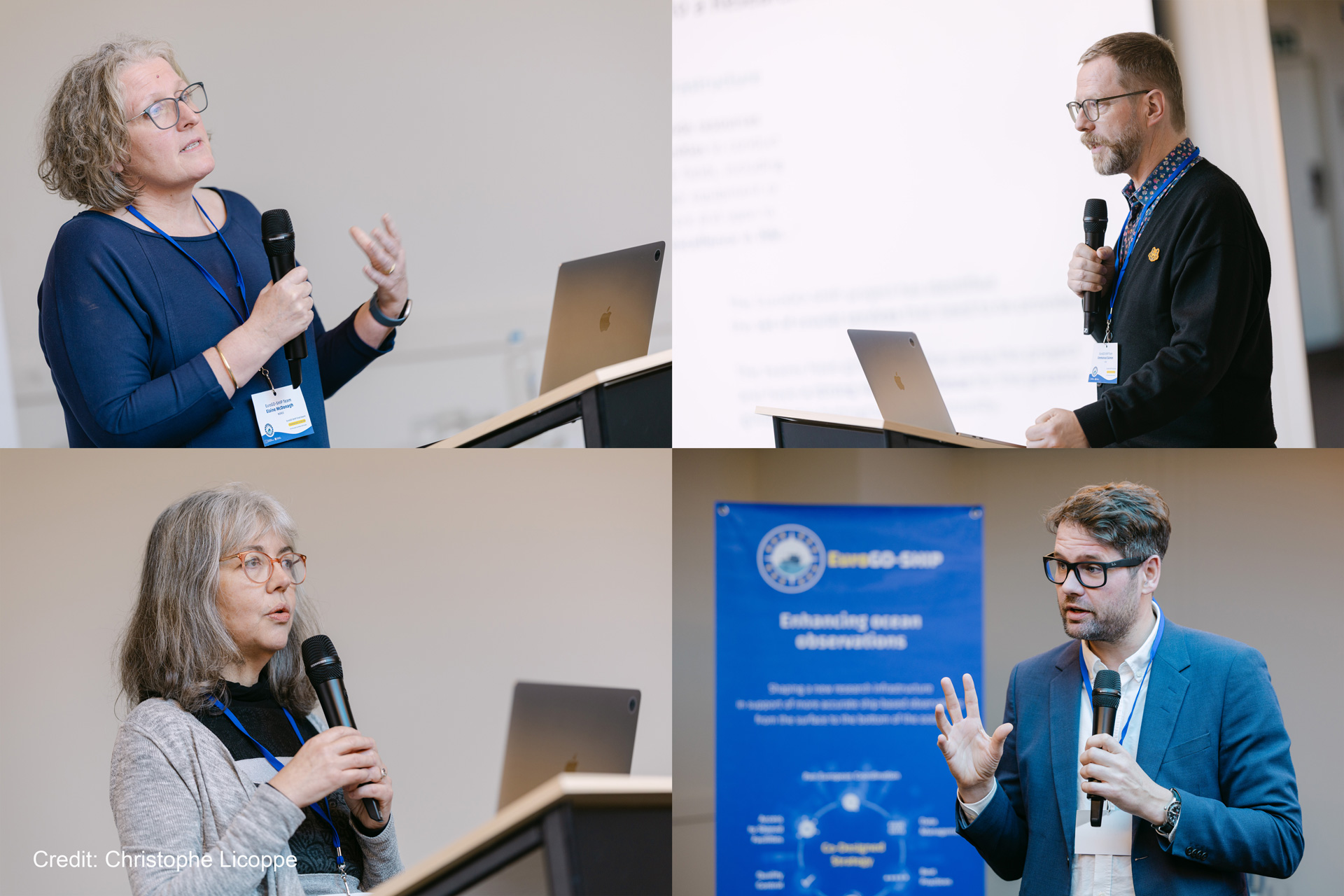
Highlights from the panel discussion included:
- Coordination leads to better data but nations and even groups within nations are still working in isolation; there is a strong desire to bring the communities together and work together.
- The role and value of this type of collaboration in helping to ‘level the playing field’ in more capacity-poor regions was highlighted.
- It is vital to share knowledge and train Early Career Researchers (ECRs, especially considering many experienced hydrographers are retiring).
- While it is recognised that good consultation is happening within the community, it has not reached the policy level.
- To have a Pan-European community, we need to reach out to nations that are not yet involved in direct dialogue but in some cases there are strong obstacles. Explaining the value of this community, as evidenced by EuroGO-SHIP, is important to gain buy-in.
- It is important to promote the necessity and the societal value of this work, particularly at the national level. If the observations stop, what will the impact be (i.e. weather forecasting, climate change data)?
- To this end, concrete examples of use cases demonstrating the importance and applicability of these measurements are invaluable in soliciting support from national organisations and Member State funding bodies. An example of such a use case was provided by the Marine Institute.
- Research vessels (RVs) are expensive to operate but we cannot only have automated systems; they do not provide the accurate data we need. This comes from measurements made from RVs.
- Taking and making available high-quality data is the work of the scientists onboard. If this work does not result in a peer-reviewed publication, there is no ‘reward’ for the scientists. There is a need for incentives to be associated with good-quality data, in the same way that peer review papers are important for career advancement.
- At the European level, funding priorities are changing. There is a need for strategic alignment amongst Research Infrastructures to bring a common message and advocate for their importance in terms of future funding.

Presentations that were given at the event were also disseminated in a public webinar.
Find the recording here.